



Europe’s established textile ecosystem has proved more fragmented and constrained than anticipated.
Brussels-headquartered ReHubs has pushed back its initial target of regenerating 2.5 million tons of European post-consumer textile waste by 2030, to 2032.
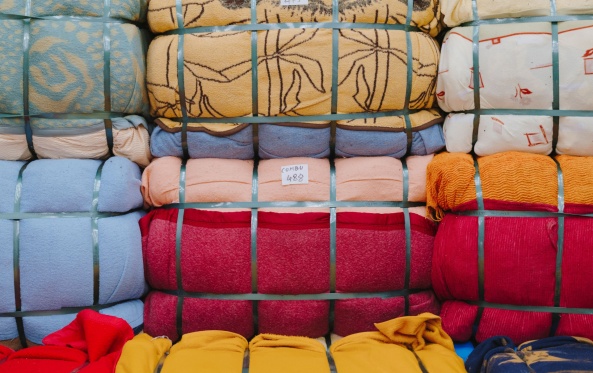
The organisation was formed in 2022 as a response to the rapidly growing mountain of post-consumer textile waste in Europe and the stubborn inability of the sector to transform it into high-value new materials at scale.
It brings together key players across the supply chain, from fibres and raw materials suppliers such as BASF, Indorama and Lenzing, to major brands including Decathlon, Inditex and Mango. Importantly, members also include key established textile recycling companies such as TexAid – although this company’s German arm filed for insolvency in July this year, as an indication of the difficulties the recycling market currently faces.
[...]
We announced ReHubs in 2022 and have made progress, but not the progress we were hoping for,” admitted CEO Robert van de Kerkhof during a recent webinar organised by Go Circular. “At this early stage, recycled fibres are much more expensive, but once we are at scale we believe they will become much more competitive, so the question is, how can we get from where we are today to where we want to be? This is where EPR schemes are going to be really critical in order to finance the investments that are needed.”
To go from a linear textile value chain to a circular textile-recycling value chain, he explained, five main parts of the value chain must be matured and scaled – collection, sorting for reuse, sorting for recycling, pre-processing and recycling itself.
[...]