

The Recycle Platform: 5 years supporting textile/footwear recycling stakeholders across Europe
Recycle by Refashion is a European digital platform that connects professionals involved in the recycling !

Recycle by Refashion is a European digital platform that connects professionals involved in the recycling !

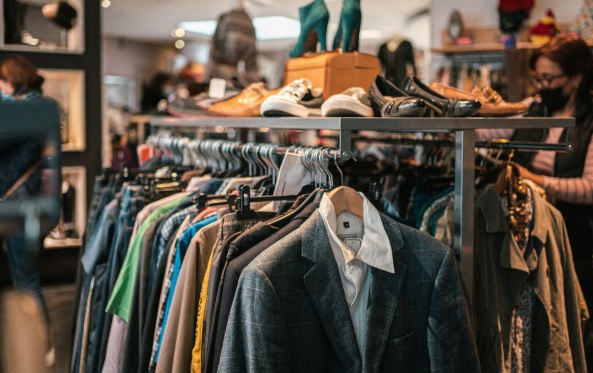
In 2023, Refashion explores the second-hand TLC market in France. A revealing study of a fast-changing sector, driving more sustainable fashion.

Supported by the French Climate and Resilience Act, environmental labelling is an ambitious project aimed at informing consumers about the ecological impact of the products they buy, encouraging businesses to reduce their environmental footprint, and promoting more responsible consumption. Discover the latest news here.
Results, studies and detailed measurement figures for the industry.
A study conducted by Refashion and CETIA to provide a state-of-the-art overview of recycling solutions for non-reusable used shoe soles in Europe – July 2025
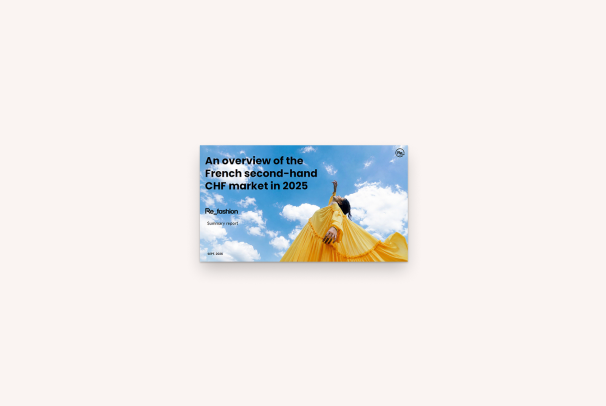
A study carried out by Refashion to provide an accurate overview of the second-hand market - June 2025
Study on the environmental impacts of the used CHF EPR sector from household consumption – June 2025
A study conducted by Refashion with the support of the research firm Terra – February 2025.
Summary by Refashion - April 2025
Refashion - 2025
Refashion - 2025
Summary by Refashion - June 2024
A study conducted by Refashion with the assistance of the consulting firm Terra - April 2023
Refashion's Regenerative Solutions Division - June 2022
Terra for Eco TLC - February 2020
RDC Environment : Study conducted on behalf of Eco TLC - December 2017
Study conducted by Eco TLC under the ADEME agreement and with the assistance of the TERRA SA consulting firm - October 2014
Report drafted by the French Ecole Nationale Supérieure des Arts et Industries Textiles - July 2014
Developing an automated sorting pilot line for textile materials recognition though NIR spectroscopy to the industrial scale. Refashion Recycle platform’s stakeholder: Soex
The Mistery project, led by the CEA in partnership with the Boer Group, The Aalto University and Horiba, aimed to prototype the use of multispectral optical sensors for the characterization of used household textiles.
The Zapateko II project, led by the ERAM group in partnership with the CETIA and winner of the 2020 Challenge Innovation (Refashion’s call for projects), has led to the conception of a report presenting the issues and constraints encountered in the development of a demonstrator for dismantling non-reusable footwear by automatic sorting and assisted tearing. It also reports on the conclusions of the sole reuse study and the first environmental impact analyses. Refashion Recycle platform’s stakeholders: ERAM Group and CETIA
This document presents an in-depth overview of thermomechanical textile recycling and serves as a guide for stakeholders to better understand the current applications, constraints, and perspectives related to the thermomechanical recycling pathway. It includes: an analysis of thermoplastic fibers the main steps of thermomechanical recycling the applications and challenges of this process
This document provides a comprehensive overview of mechanical recycling route for textiles and serves as a guide for stakeholders to understand current applications, limitations, and opportunities in textile mechanical recycling. It includes : an overview of the mechanical recycling processes the applications of these processes the current challenges of this recycling route
Summary by Refashion - June 2024
Note presenting the synergies between the Construction and Textiles & Footwear sectors.
This workshop provided an opportunity to establish the state of the art for the recycling of non-reusable footwear in France, by bringing together representative players from the entire value chain: sorting operators, technical centres, recyclers and marketers. The dismantling of shoes and the recovery of components are among the many constraints to be lifted in order to recycle shoes, even before talking about the industrialisation of recycling. Refashion Recyle Platform’s Stakeholders: CETIA, CTC, Fédération Française de la Chaussure, Groupe ERAM, Revalorem et Salomon
This workshop brought together stakeholders around a common topic: polyamide recycling. Its development seems today to be slowed down by the viability of the economic model more than by the recycling technology itself. Although there are many other constraints which need to be removed such as the conponents mix in the textiles. Refashion Recyle Platform’s Stakeholders: CETI, Cycl-add, Infinite Athletic, Chamatex, Emmaus Vertex and Etam
This workshop takes makes of the current state of polyester fibre recycling in France, thanks to constructive exchanges between sorting operators, technical centres, recyclers and marketers, in closed and open loops. In particular, it appears that the sorting and unravelling stages are decisive before going any further in the recycling process. Obstacles to the correct identification of textile materials persist: conponents mix, the presence in small proportions of some materials (elastane), the use of certain pigments or the 3D structure (multilayers, coating, etc.). Refashion Recyle Platform’s Stakeholders: Buitex, Brochier technologies, Cetelor, Rossignol, Michelin, Mapea, Ain Fibres and Synergies TLC