
June 1, 2024
Cross-interview: Idkids and Gémo on children's fashion
"In children's fashion, we do eco-design without knowing it"
Can you summarize your approach for us ?
Sophie Lefebvre - Head of Eco-design and Circular Economy at IDKIDS :
The topic of environmental impact is one of the pillars of the group's CSR approach. Like many brands, we carried out a carbon footprint assessment which proved that we had a significant challenge regarding finished products.
Eco-design is therefore a major strategic lever for implementing our environmental policy, as it aims to reduce the environmental footprint of all our products throughout their life cycle.
Since the Winter 23 season, we have undertaken to accelerate our approach by calculating the environmental footprint of all our TLC products by life cycle stage.
In parallel, since 2015, Okaidi has been participating in work carried out in France and Europe on environmental labeling and physical durability, so that our standards adapt to future regulations on the textile industry..
https://www.okaidi.fr/eko-pour-un-monde-plus-responsable/okaidi-sengage-pour-l-environnement
Today, we are trying to structure the numerous initiatives emerging from our departments to make our CSR approach more legible and structured. We have therefore decided to formalize our commitments and objectives until 2025 within a global CSR Roadmap, currently being rewritten.
Virginie Bodineau - Technical and Quality Director at Gémo :
The creation of children's products has incorporated eco-design elements for many years, particularly for product safety reasons. It is true that textiles have been moving on this subject for longer, unlike footwear, which is a more complex product. Two steps are essential to make good progress:
- Step 1: know your materials well, master your nomenclature (materials, accessories, etc.)
- Step 2: seek to reduce your impact by selecting more virtuous materials. We have an internally developed tool with our IT teams that allows us to calculate the impact of each product and/or to run simulations and therefore compare them, in order to make the best choice to reduce our environmental impact.
We carry out tests in accredited laboratories (our products are tested physically and chemically), we encourage our suppliers/manufacturers to be "Oeko-Tex 100", then "Oeko-Tex Step", then "Oeko-Tex Made in Green". We are led to work directly with material manufacturers to ensure the traceability, quality and harmlessness of our products.
What was your working method? Its different stages?
Sophie (IDKIDS) :
For many years, the group has implemented several actions around certified raw materials such as organic cotton, recycled cotton, and recycled polyester.
The next step was to measure our actual environmental impact, which is why we decided to work with La Belle Empreinte, an independent third-party organization, for impact calculation and carbon footprint display.
This was a major project carried out in collaboration with our suppliers and our local teams in our production countries.
To perform a life cycle analysis, it is necessary to collect a great deal of detailed information on each product. We already had a lot of data available, but we were missing some more in-depth information (e.g., weight of products and each component, origin of fibers, traceability of each third party, etc.) that we did not have in our internal tools. For this missing data, we had to question our suppliers about each product. In parallel, we worked with our IT teams to integrate the missing data into our product management tools for our upcoming seasons.
Ultimately, we managed to cover the analysis for all our products since the Winter 23 season, which is over 6000 TLC products. The analysis covers all 16 environmental criteria of the PEFCR (examples: carbon footprint, water consumption, water eutrophication, etc.).
While awaiting the framework for environmental labeling, we have chosen to make only the carbon footprint visible to our customers, as it is the most well-known environmental impact to date.
This work has allowed us to carry out a detailed analysis and an observation over two seasons in order to continue and manage our eco-design approach around KPIs (Key Performance Indicators) and concrete actions to be implemented throughout the life cycle of our products.
Virginie (Gémo) :
We first carried out a carbon footprint assessment, which allowed us to set a target of reducing our environmental impact by 30% by 2030.
To achieve this, we worked to identify the types of materials we used in the manufacturing of our products in order to use the most virtuous materials (those with the lowest impact). This was made possible by carrying out LCAs (Life Cycle Assessments). This allowed us to better understand our materials and to pool them.
In parallel, we are working to develop more durable materials and products, notably by meeting and even exceeding the criteria for eco-modulation durability. In 2023, we had many references that met these durability criteria.
How do you address the topic of durability?
Virginie (Gémo) :
To ensure the safety and quality of our products, we carry out chemical and physical tests in accredited laboratories. We designate them to ensure the quality and durability of the products placed on the market.
All the tests carried out allow us to improve our materials and better define the expected technical characteristics. It should be noted that the country of origin of these can also have a strong impact on the LCA results, such as India, for example, which is very carbon-intensive due to a significant use of coal.
In children's fashion, we do eco-design without knowing it, particularly through the safety rules that we must apply to these products.
For us, eco-design means: integrating all these elements without forgetting that we must now think about the end-of-life of our products and notably about elements that could disrupt recycling.
Sophie (IDKIDS) :
We participated in the Durhabi study, whose ambition was to develop a shared methodology for evaluating product lifespan that, for the first time, integrated usage, based on the study of product solidity and resistance over time, as well as actual consumer use.
Since late 2023, we have also launched tests to measure the durability of our products against Refashion's requirements. We have tested over 450 references. This database of results allows us to identify areas for improvement, both in terms of materials and the assembly of our products. It is planned to continue these tests on a larger scale.
How do you, specifically, raise consumer awareness about extending the lifespan of your products?
Virginie (Gémo) :
We have been working with Cofreet (www.lavermonlinge.com/) for many years to better master our care codes, and we very early on encouraged our customers to follow the care advice offered by "Clevercare" (www.lavermonlinge.com/FR/cofreet/Clevercare.info.asp).
We have also made repair and customization kits available for trial in two stores to encourage our customers to repair their clothes.
Finally, we produce and make available to our customers on our website video tutorials on the best way to care for and repair a product.
Sophie (IDKIDS) :
In addition to encouraging consultation of the COFREET and Clevercare websites, we have put dedicated pages of advice and tutorials on the care, repair, and upcycling of our products online on the Okaïdi.fr website:
www.okaidi.fr/eko-pour-un-monde-plus-responsable/entretenir-et-reparer-vos-vetements
We also regularly participate in Refashion's #RRRR campaign !
Did you encounter any obstacles? Which ones?
Sophie (IDKIDS) :
Our teams are sensitive to this topic, so that greatly helped launch the project! They are aware that impact measurement is essential for progressing with eco-design. Our Management is also very involved and a driving force in the approach.
At an operational level, it is certain that the workload for all actors in the product value chain on this subject is not negligible, in professions that are already heavily burdened. We overcome these obstacles through acculturation work. We also rely on measurement tools so that teams become aware of their impact, by business sector, and thus take ownership of the subject.
Another obstacle, in my opinion, is that of databases. It is necessary, through future regulations, that we have common impact databases in order to all have the same reference frameworks. This should be possible with future French and European environmental labeling.
It's a complex subject, but we implemented these data analyses in less than 6 months, so it's feasible, and we are proud of our progress on this topic. I can only encourage companies to train themselves and undertake this exciting process.
Virginie (Gémo) :
Strategies only work if management is committed. At Gémo, the "Gémo for Good" strategy is applied to all Gémo brands. This is what allows us to move forward quickly. Strategy must be at the heart of the business, although the "infusion" phase is important at the beginning.
From an operational point of view, Gémo recently integrated a communications director with the aim of better sharing these topics with our customers.
From a human perspective, we support our suppliers and teams. It's a new way of creating, working, producing, and marketing our products. We are in a period of "Change." For the teams, operating, creation, and design methods are evolving, and our suppliers are adapting to the point of being proactive themselves.
Have you developed pilot projects for alternative economic models?
Sophie (IDKIDS) :
We have worked on several levers :
- Second-hand with "IDTROC" for textiles and toys. IDTROC has existed in our Okaïdi and Oxybul stores since 2016, throughout the year: www.okaidi.fr/idtroc-4?intid=lp-seconde-vie-idtroc. We also have a second-hand website for Jacadi: "Jacadi second life".
- The deposit scheme, which is an instant buy-back guarantee for Okaïdi - Obaïbi products less than 2 years old. They are then resold second-hand via IDTROC in stores. Tested in 16 stores, it is one of the levers of Okaïdi's EKO program to facilitate the second life of items, right from the purchase of the new product. www.okaidi.fr/eko-pour-un-monde-plus-responsable/eko-pour-un-monde-plus-responsable/innover-pour-une-mode-raisonnee/la-consigne
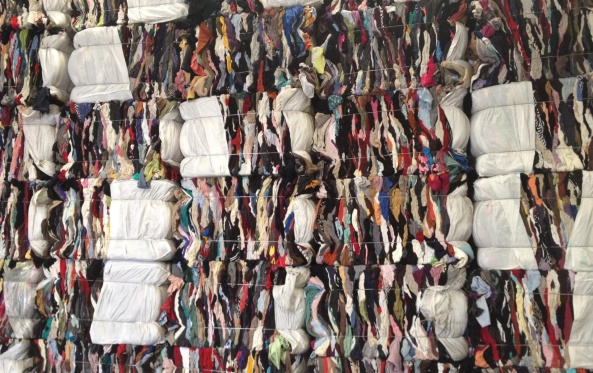
- The collection of end-of-life products and their recycling in France. The objectives are multiple :
- Avoid textile waste at the end of life;
- Work with local partners and ensure their traceability and the transformation of CHF in France;
- Innovate and turn our waste into new clothes or products.
Virginie (Gémo) :
We studied the lifespan/usage duration ratio, and the products and target audiences concerned.
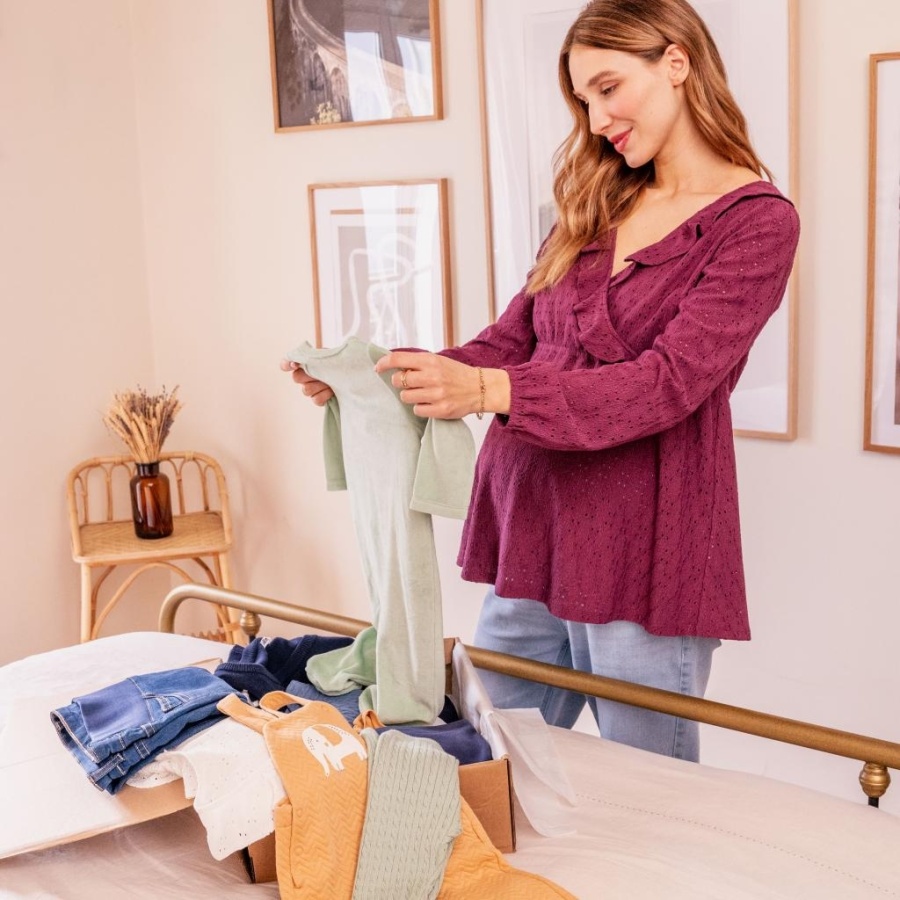
We identified pregnant women, to whom we offer clothing rental, and subsequently launched baby products. All logistics are handled internally, as is the case for the Bocage workshop in footwear, which utilizes all the expertise of our "La manufacture" factory in Montjean sur Loire to repair and recondition our shoes (https://latelierbocage.fr/).