
Can you summarize your approach in a few words? How did the idea emerge?
The idea was born within the Boer Group, an active member of ReHubs, which wanted to test the technical and economic feasibility of closed-loop recycling in Europe. Refashion was involved from the beginning via the RMI (Recycled Materials Incorporation) Experiments scheme.
The project was led by Frankenhuis, a mechanical recycling specialist based in the Netherlands. The brand Zeeman, for its part, had a clear ambition: to integrate a maximum of recycled fibers into new finished products. After several discussions, the choice fell on two women's pieces: a sweater and a cardigan.
What was your working methodology (the main steps)?
Several industrial players were involved in this project :
- Collection and sorting in France: 24 tonnes of knitted textiles were identified.
- Frankenhuis (Netherlands) carried out color sorting: only ecru and blue textiles were selected to avoid a dyeing step, which is very water and energy intensive.
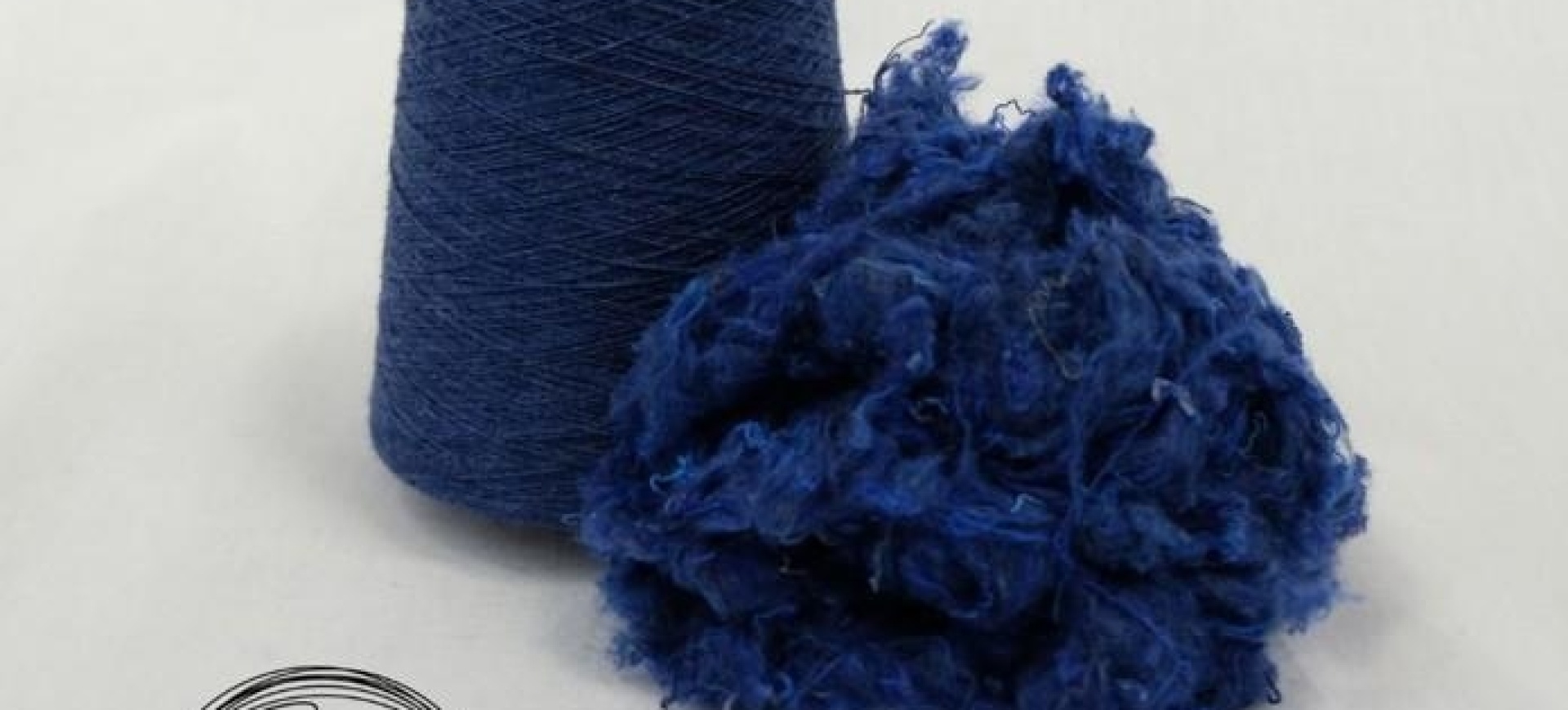
- Preparation and defibering: carried out by Frankenhuis, to obtain recycled fibers.
- Spinning (Spin Aker, Italy): incorporation of 30% virgin fibers to obtain a strong yarn.
- Fully-fashioned knitting (Stella Sky, Italy): a technique that allows obtaining the finished garment directly, without an additional manufacturing step.
In total, 8 months of collaboration were necessary to successfully complete the project.
Did you encounter any obstacles? If so, what were they?
Two main adjustments marked the project:
- The initial plan, which consisted of sorting only cotton and acrylic, was abandoned, which saved time and reduced costs.
- The project to develop men's and women's clothing was refocused solely on women's pieces, to better match industrial constraints.
What were the success factors?
The keys to success first lie in the good communication established between all stakeholders, which ensured coherence and efficiency throughout the project.
Another crucial factor was the flexibility shown by Zeeman in agreeing to move away from the traditional product development model, which allowed for the emergence of more innovative approaches.
The project was also driven by a strong ambition: to design a garment containing 70% post-consumer recycled fibers, a remarkable achievement compared to the market average of around 30%.
Finally, Refashion's financial support played a decisive role by covering essential steps such as collection, transport, color sorting, defibering, and spinning.
What is the environmental impact of your products?
According to the analysis conducted by Zeeman (available here), the products show a significantly reduced impact compared to equivalents made in Asia from virgin fibers.
The gains notably concern :
- the reduction of greenhouse gas emissions,
- decreased water consumption,
- and notable energy savings.
How are the products received by consumers?
The success is there: the products sell well and appeal to customers.
Zeeman summarizes: "The designs are appealing, the quality is good, the prices are accessible, and delivery times have been met..»
This project demonstrates that it is possible, in Europe, to create an industrially viable circular product that is appreciated by consumers.
Thanks to Zeeman and Frankenhuis.