
October 9, 2026
Maison Bonnefoy: Lower-impact knitting, from recycled yarn to seamless 3D technology
An immersion into Maison Bonnefoy’s textile know-how through the testimony of Chloé, third-generation director of this family-owned knitting company based in Haute-Loire.
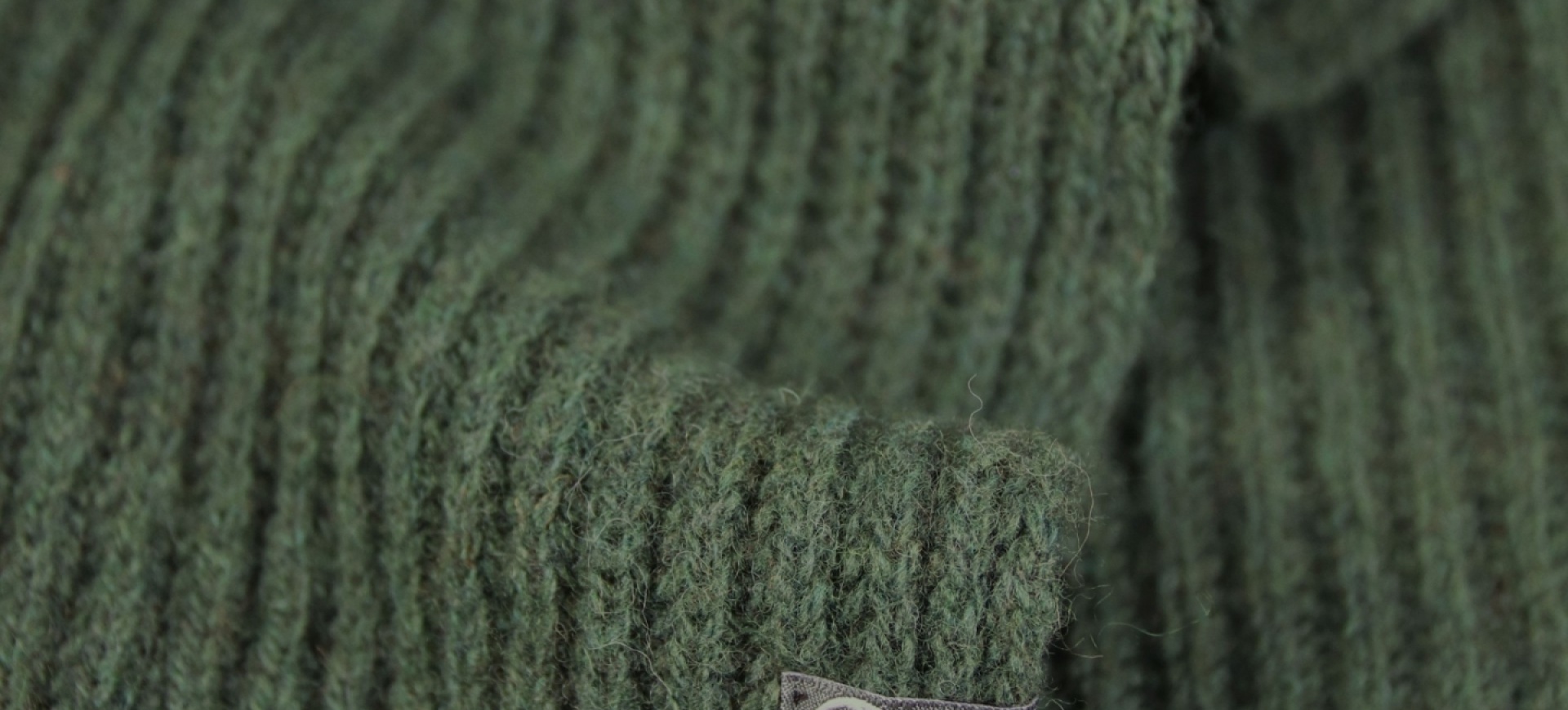
Can you explain the origins of the integration of recycled materials within Maison Bonnefoy?
Maison Bonnefoy is a family-owned company founded in 1940 by my grandfather, specialising in the manufacture of knitted accessories such as gloves, scarves, hats, ponchos and blankets. Today, I represent the third generation at the helm of this maison.
The idea of integrating recycled materials emerged particularly naturally from 2019 onwards. It was the outcome of a fundamental internal realisation of the need to reuse what already exists rather than deplete the planet’s resources by constantly creating from virgin material. At the same time, we were facing growing demand from our professional business-to-business (B2B) customers, who were looking for lower-impact solutions.
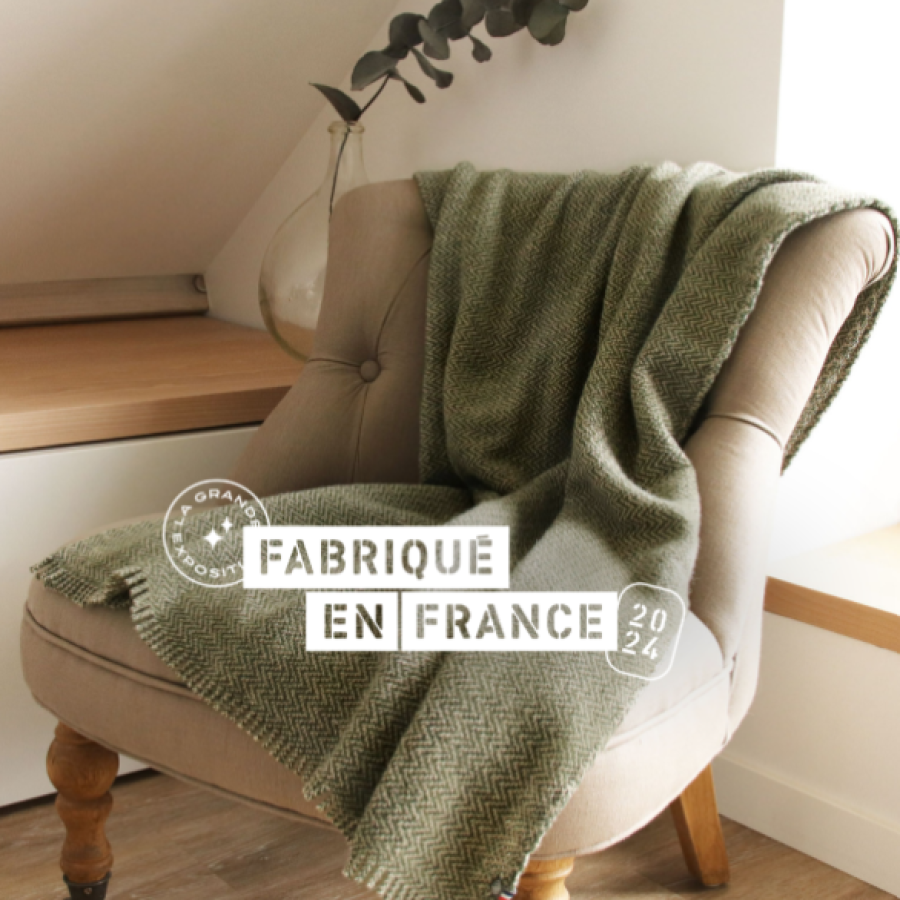
We moved forward very gradually, carrying out tests year after year, refining our knitting techniques and listening to market feedback. This continuous improvement approach led to our selection for the Grande Exposition du Fabriqué en France at the Élysée in 2024 thanks to a blanket made from recycled materials, while also strengthening our regular presence at the Made in France trade show.
« Our objective is not to make false promises about an unrealistic ultra-soft feel, but to embrace an authentic, robust and zero-waste knit thanks to 3D knitting and local recycling. »
What products are made, and using which manufacturing processes?
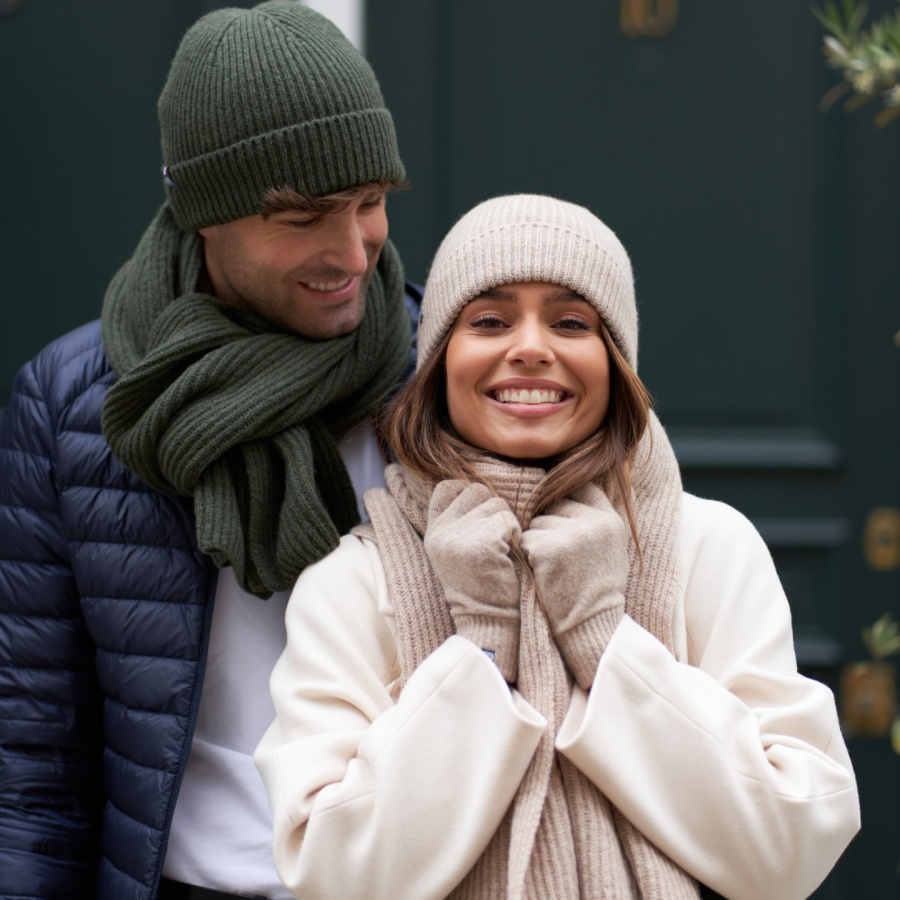
Today, recycled materials account for just under 20% of all our collections, alongside our organic cotton ranges. We use these recycled fibres in both the fashion and home segments. On the fashion side, our flagship line is called the Patrice range. It offers a very comprehensive selection including scarves, hats, gloves, mittens and ponchos. It has become a permanent basic for us, which we regularly adapt for professional customers wishing to integrate lower-impact products into their own collections.
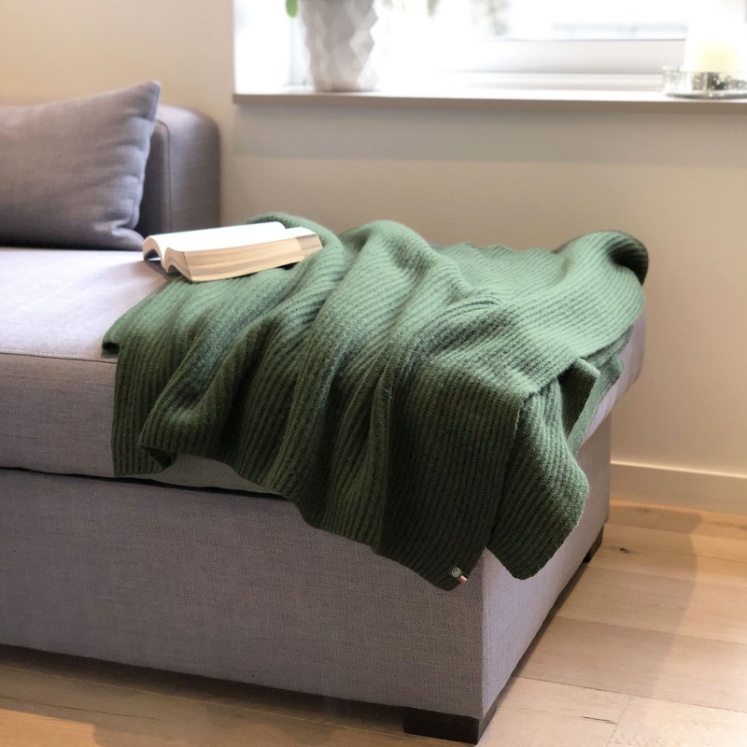
On the decoration and home side, we have developed two flagship blankets: the Paris blanket and the Vannes blanket. Beyond the products themselves, we apply this circularity approach across our entire business. For example, we have recycled cotton pouches woven by a fellow manufacturer located in the neighbouring department, and our brand labels incorporate recycled polyester.
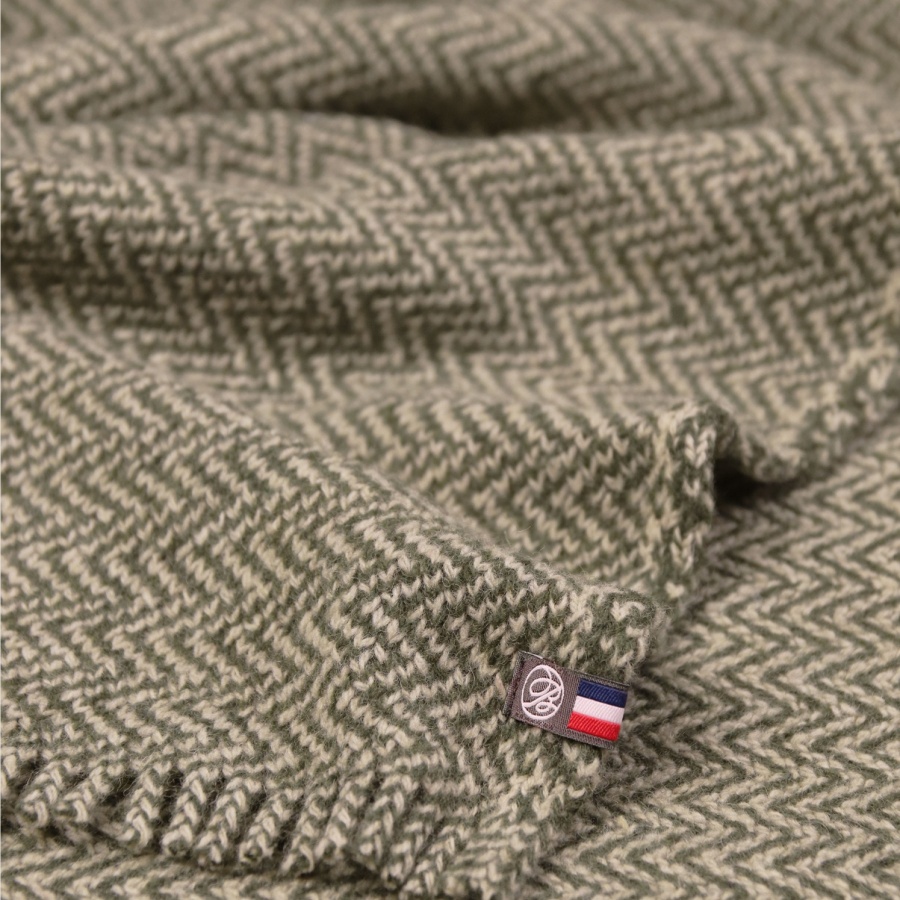
In terms of materials, we mainly use Ecopure yarn supplied by our partner Filatures du Parc. This yarn is made from used textiles that are sorted by composition and colour, shredded, then re-garnetted and re-spun, without undergoing any re-dyeing stage. For knitting, we use two traditional technologies: flat knitting, used in particular for the Paris blanket, and Raschel knitting, a warp-knitting technique used to produce the Vannes blanket.
At the same time, we are strongly developing 3D knitting. This revolutionary technology makes it possible to knit pieces directly in three dimensions and fully shaped, such as hats or gloves. This process eliminates the cutting stage and produces invisible finishes of very high quality. From an environmental standpoint, it is a genuine way to reduce offcuts: with 100 kg of yarn fed into the machine, we obtain around 99 kg of marketable finished products, with no material waste.
What are the main technical constraints and limitations encountered?
When working with garnetted used garments from mechanical recycling, the main technical constraint comes from the fact that shredding inevitably shortens the fibre length. This shortening of the fibre has two major consequences during manufacturing:
- on the one hand, a shorter fibre can weaken the overall strength of the yarn. If the yarn is not processed appropriately during spinning or when selecting the knitting structure, it may break easily on the machines or result in a less durable finished product.
- on the other hand, the raw material obtained has a more raw, more rustic initial feel than a traditional virgin fibre. For fashion accessories such as scarves or hats, which are worn directly against the neck and face, softness is an absolute purchasing criterion. If the short fibre remains trapped inside the knit, the garment may cause an unpleasant prickling sensation when worn, which was our major technical challenge.
How do you adapt your know-how to work around these limitations?
To overcome these constraints without distorting our product or adding chemical finishes that would hinder the article’s future recyclability, we combined several technical adjustments at each stage of the value chain.
First, in terms of resistance, we spoke with Filatures du Parc at a very early stage and chose to work the yarn as a two-ply twisted assembly rather than as a single strand. This construction immediately gives the yarn excellent strength, which we verify directly during knitting, since an overly fragile yarn would break immediately on our machines.
Next, we adapted the structure of the knit itself. By adjusting the choice of structure and the tightness of the knit, we make sure not to trap the fibre too much within the structure. If the fibre is too constrained, the knit becomes rough and prickly. It therefore needs to retain a certain freedom of movement.
Finally, the key stage takes place during washing and physical finishing. We use only Ecocert-certified detergent, in full alignment with our approach. It is the very precise adjustment of the washing cycle, the amount of water, the drum movement and the fulling operation that makes it possible to work the material. This natural physical treatment brings out the fibre from the yarn to give it all its loft, volume and softness, thereby eliminating any prickling sensation.
What is the economic equation and what is the impact on the final price?
The economic impact of integrating recycled materials has been an excellent surprise for our company. There is a persistent preconceived idea that using recycled fibres would considerably increase cost price due to the additional sorting and shredding stages. At Maison Bonnefoy, experience has proved the opposite.
The choice of Ecopure yarn enables us to offer Made in France products made from recycled materials at competitive prices. For example, our Paris blanket is sold at a retail price of €159, making it the cheapest blanket in our entire range. Our Vannes blanket is positioned just above it, at €165.
By controlling all knitting and manufacturing in-house in our Haute-Loire workshop, we demonstrate that it is entirely possible to combine French manufacturing, recycled materials and an accessible price positioning for the end consumer.
How are these products received, and what is your commercial messaging?
These products have been received very enthusiastically across our two distribution channels. On the business-to-business (B2B) side, our professional customers who discover our recycled range are immediately won over by the concept and regularly ask us to develop specific models or colours suited to their own brand image.
On the business-to-consumer (B2C) and retail side, we made the strategic choice of total transparency. We do not try to oversell artificial or unrealistic softness by promising cashmere when the product is in fact made from recycled cotton and wool. On our website and in our sales messaging, we explicitly describe our products as having a “robust knit” and a “textured feel”.
This honest messaging is perfectly understood and appreciated by consumers. It is particularly successful among male customers, who make up the majority of buyers of our Patrice range. Men appreciate this authentic, rustic feel, very close to virgin wool, guaranteeing a solid and long-lasting product.
We therefore identify two buyer profiles: on the one hand, customers who are highly aware of environmental issues and actively seek recycled products; on the other, customers attracted by the aesthetics and Made in France positioning, for whom the ecological argument is the ideal purchase trigger.
What are your next steps and future ambitions?
For the years ahead, we intend to continue and amplify this virtuous dynamic. We are pleased to see that our yarn suppliers are continually enriching their catalogues by incorporating increasing percentages of recycled and organic materials into their standard ranges, which will allow us to further expand our creative possibilities.
From an industrial standpoint, our major priority is the expansion of seamless 3D knitting. The acquisition of latest-generation, increasingly sophisticated knitting machines is opening up very promising prospects for us. We are currently working on the development of complete pullovers knitted in 3D, guaranteeing the total absence of irritating seams and a zero-waste process.
Finally, we continue to make this cutting-edge industrial tool available to customers with limited production volumes. These players, who have their own local French wool spun, seek to add value to small feedstocks without wasting their material. By offering them our 3D knitting, we guarantee them an extremely low offcut rate, thereby strengthening our role as a partner supporting sustainable textile initiatives in France.