

After a winding journey through the cobbled streets of small villages in Guilhabreu, on the outskirts of Porto, Portugal, the landscape opens out into green hillsides and fields. On an unassuming road lies the home of Valérius 360’s operations, a large factory facility where new life is breathed into would-be textile waste.
The staff are proud of their location: “The north of Portugal has the most beautiful countryside,” boasts one member of the team, by way of a welcome.
It might seem unexpected that this quiet landscape, seemingly unchanged for generations, would now be host to a center of innovation. But Valérius 360 represents a different kind of inheritance—where progress feels rooted, shaped as much by reverence for the land as by the technology redefining the future of textiles.
[...]
Ana Tavares, CEO of RDD Textiles, a partner of Valérius, conducts a tour around the factory, detailing each step of the process of transforming post-industrial and post-consumer textile waste into recycled fibers and new yarns, which can be used to create jersey fabrics and high-quality garments.
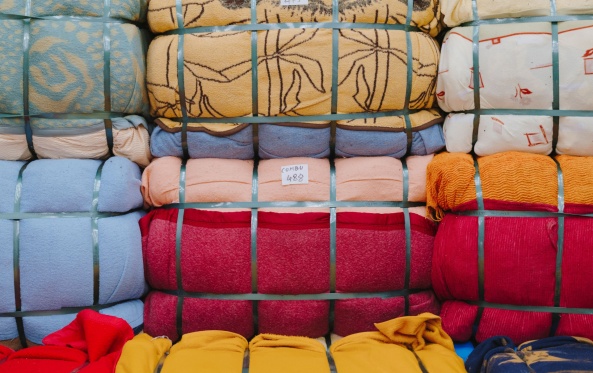
Feedstock usually comes from partner brands, who see the entire process through to receive finished items made from their original input. 80% of feedstock Valérius 360 works with is post-industrial, usually offcuts and scraps from the cutting process. 20% is post-consumer, which arrives pre-sorted by a partner company in Spain who know the requirements in terms of what the hub can process. Zips, buttons, and large prints must be removed so they don’t clog the machines. 100% cotton is preferred, and stock is sorted by color and composition.
Once the waste textile has arrived at Valérius 360, it is cut into smaller pieces and pulverized with a solution that softens the material. In the next room, these pieces are shredded, making them even smaller. The resulting recycled fiber has a fluffy, cloud-like texture that is soft to the touch—as though the cotton has been returned to its pre-processing state.
[...]